
What do I say? How to handle harmful comments in class
-
Kathleen Gordon
- Tanja Hagedorn
Share

You’re midway through a group discussion when a student makes an inappropriate remark. You know you need to say something—but what?
In classrooms across Australia, we regularly find ourselves navigating challenging moments. Whether it’s a comment rooted in bias or misinformation, a racial stereotype, or a sexist remark, inappropriate language can appear in any classroom—and how we respond matters.
When harmful or exclusionary comments go unaddressed, they can signal to students that their safety, dignity, or identity isn’t protected. This is particularly harmful for students from marginalised backgrounds. However, when we respond with care, these moments can become powerful opportunities for learning and growth.
Start with these principles
So, what can you do when a student says something inappropriate? Start with these guiding principles:
- Stay calm – Take a breath. You don’t need the perfect words right away.
- Use the moment to explore and teach not punish– The goal is awareness, not shame.
- Validate – Ensure that you validate the student’s opinion and their need to express it.
- Prioritise safety – Make sure any students harmed by the comment feel seen and supported.
- Focus on the impact, not just intent – Even if something “wasn’t meant that way,” it can still cause harm.
- Follow up if needed – Some conversations are best continued after class, one-on-one, or with support.
Practical Responses: What you can say in the moment
Use the moment to name the issue without escalating. Use the moment to invite dialogue.
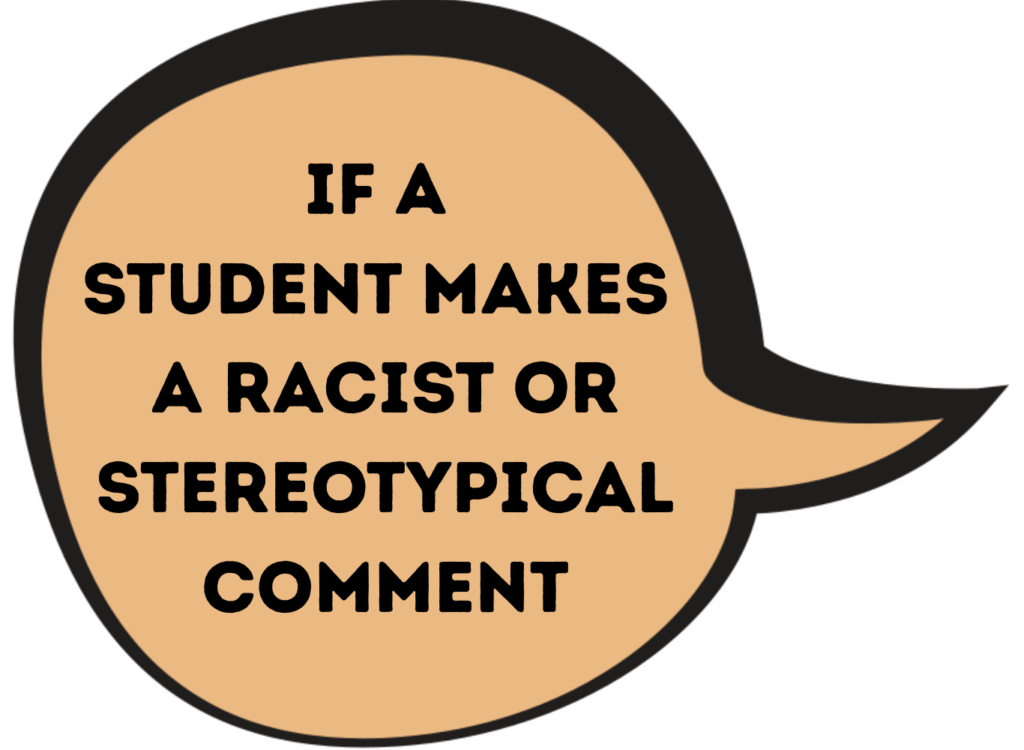
‘Okay, let’s pause right here for a second, let’s talk about that word you just used.’
‘Let’s pause here—do you think what was said might reinforce a stereotype that might be harmful?’
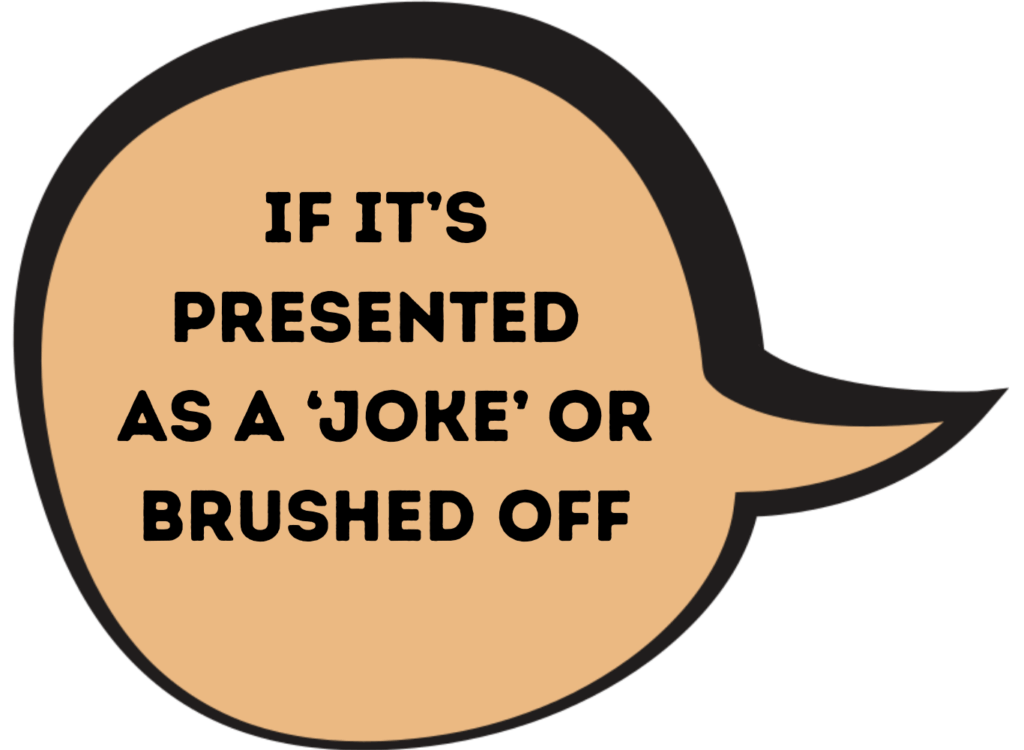
‘Let’s remember—humour that relies on stereotypes or puts someone down isn’t respectful.’
‘Even if it wasn’t meant to hurt, it still can. What we say shapes how others feel and who feels safe here.’
Reframing humour helps students understand that “just joking” doesn’t erase harm.
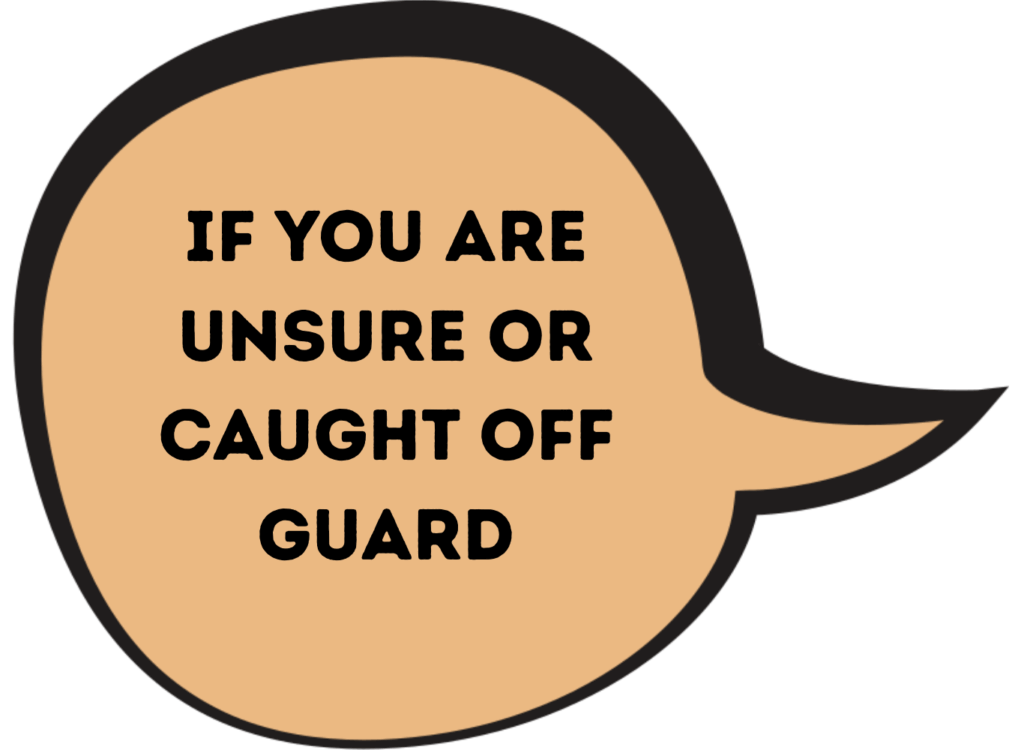
‘I heard what was said, and I want to think carefully about how to respond. We’ll come back to this.’
‘That didn’t sit right with me. I need a moment to gather my thoughts—we’ll revisit it shortly.’
You don’t need all the answers in the moment. A pause is better than silence.
Following Up Matters
Sometimes, the best learning happens after class ends.
- Speak with the student privately – This may provide an opportunity to understand the reasons behind the comment and invite reflection.
- Check in with affected students – A simple, ‘How are you feeling about what was said earlier?’ can go a long way.
You may also consider:
- Revisit expectations – Remind the class about agreed-upon norms around respect and inclusion.
- Involve leadership or wellbeing staff if the comment indicates deeper issues or requires support beyond your role.
You won’t always get it perfect—but that’s not the point. Responding to inappropriate comments is about creating safer, more inclusive spaces for all your students. It’s about modelling respectful dialogue, interrupting harm, and showing that everyone belongs. Even a short, thoughtful response can make a lasting impact.
Additional Resources
Student Activities
- Designed for mid-Primary aged students, our free online interactive lesson, Feeling Excluded explores misunderstandings that can occur with cultural differences. You can also access the lesson plan and resources for this activity from cool.org.
- Designed for lower-Secondary aged students, our free online interactive lesson, Making Assumptions explores the factors that shape our attutude to others. You can also access the lesson plan and resources for this activity from cool.org.
Professional Learning
- Explore our free online interactive module for teachers, Responding to Racism & Harmful Language.
- Speak up at school guide from Learning for Justice (USA) offers advice to adults about how to respond to biased remarks.
Further Exploration
- Be the change community kit from Common Ground
About the Authors
Tanja is a peacebuilder, facilitator, and advocate for gender equity with over 25 years of experience working across diverse communities and global contexts. She is committed to creating inclusive spaces for dialogue, healing, and transformation—particularly where cultures, faiths, and identities intersect. With a Master of Peace and Conflict Studies, her work and academic focus centre on empowering others, challenging injustice, and fostering sustainable social change.
Kathleen (she/her) is a former primary school teacher, born on Mandandanji Country in Roma and now living and working on Kabi Kabi/Gubbi Gubbi Country on the Sunshine Coast, Queensland. Her family came to Australia from Scotland and Ireland in the late 1800s. Kathleen’s work as an educator reflects her commitment to social justice, peace, democratic processes, and sustainability.
Copyright
Metadata © Together for Humanity (except where otherwise indicated). Digital content © Together for Humanity (except where otherwise indicated). Video © Together for Humanity (except where otherwise indicated). All images copyright their respective owners. Text © Together for Humanity is licensed under a Creative Commons Attribution-ShareAlike 4.0 International License (CC BY-SA 4.0).
Copyright
Metadata © Together for Humanity (except where otherwise indicated). Digital content © Together for Humanity (except where otherwise indicated). Video © Together for Humanity (except where otherwise indicated). All images copyright their respective owners. Text © Together for Humanity is licensed under a Creative Commons Attribution-ShareAlike 4.0 International License (CC BY-SA 4.0).
- Stage: All
- Curriculum: All
- Topics: Dialogue, Racism